

Vitalik Buterin Endorses EIP-8288 and leanPCS to Accelerate Ethereum’s Quantum Resistance
Updated: Nov 17, 2026 at 00:01
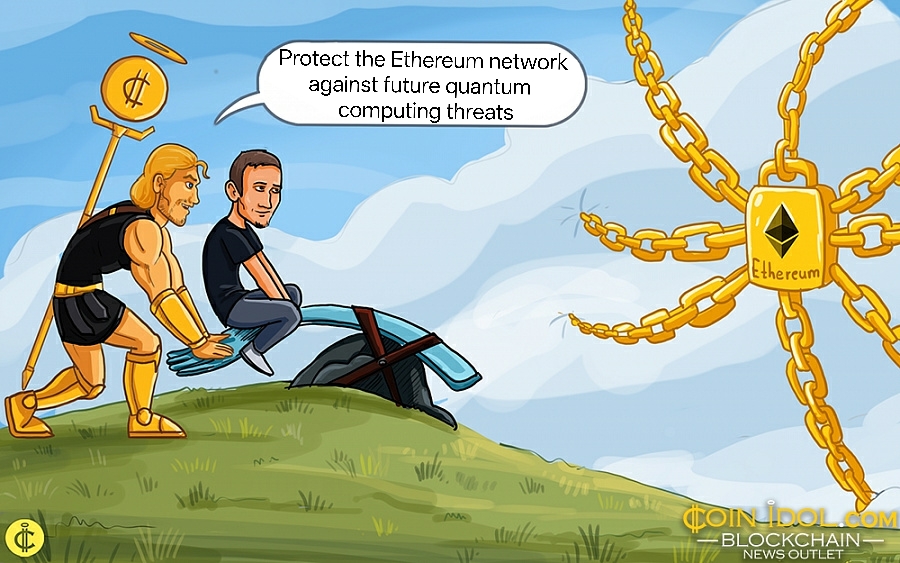
Ethereum co-founder Vitalik Buterin has thrown his public support behind Draft EIP-8288 and the leanPCS (Polynomial Commitment Scheme) cryptographic approach, outlining a faster and more efficient technical pathway to protect the Ethereum network against future quantum computing threats.
As quantum computing research advances toward breaking conventional 256-bit elliptic-curve cryptography (such as ECDSA used across modern blockchain wallets and BLS signatures), Ethereum researchers have been actively structuring post-quantum defenses.
However, transitioning to quantum-resistant cryptography has faced a massive engineering hurdle: data bloat and prohibitive gas costs.
Standard modern cryptographic signatures require roughly 65 bytes. In contrast, post-quantum signature schemes (such as hash-based lattice signatures) weigh in at 2 to 3+ kilobytes per signature. Processing these heavy signatures directly inside the Ethereum Virtual Machine (EVM) would cost anywhere from 150,000 to 200,000 gas per transaction, with advanced private transactions scaling past 10 million gas.
How EIP-8288 and leanPCS Solve the Bottleneck
Drafted to tackle this exact dilemma, EIP-8288 introduces in-mempool cryptographic signature and proof aggregation. Instead of forcing every individual user's bulky post-quantum signature onto the main chain, validators and nodes fold individual signatures and proofs into recursive STARKs (Zero-Knowledge Scalable Transparent Arguments of Knowledge) directly within the network's mempool.
Under this architecture each block carries a single compact aggregate proof rather than thousands of bulky, independent signature files. Moreover, the protocol aims to drive post-quantum verification costs down to the low tens of thousands of gas, easing network congestion and block-space pressure.
Commenting on his evolving stance, Buterin noted on social channels that after weeks of technical evaluation, his perspective shifted significantly toward backing leanPCS as a leaner, more flexible mechanism to introduce quantum security sooner than previously anticipated.
Market Implications
While EIP-8288 remains in draft form and does not carry a confirmed mainnet launch date, it plugs directly into Ethereum’s broader Lean Ethereum roadmap, which targets core post-quantum infrastructure milestones around 2028-2029.
The announcement arrived during a volatile mid-November 2026 market window where Ethereum faced macro-driven liquidations, as Coinidol.com reported, and spot ETF outflows, testing local technical supports near $1,750-$1,800.
Analysts note that while the proposal has no immediate bullish price catalyst given its early draft status, it highlights Ethereum's proactive governance and ongoing architectural preparation for multi-year structural risks compared to legacy networks lacking active migration paths.
Disclaimer. The data provided is collected by the author and is not sponsored by any company or token developer. This is not a recommendation to buy or sell cryptocurrency and should not be viewed as an endorsement by Coinidol.com. Readers should do their research before investing in funds. Brought from CoinIdol.com.
Blockchain
Price
Price
News
News

(0 comments)