

Vitalik Buterin Redefines Ethereum’s Value Proposition Amid Market Pressure
Updated: Nov 11, 2026 at 00:34

On November 10, 2026, Ethereum (ETH) co-founder Vitalik Buterin issued a series of statements addressing the network's long-term economic narrative, sparking wide discussion across the cryptocurrency industry.
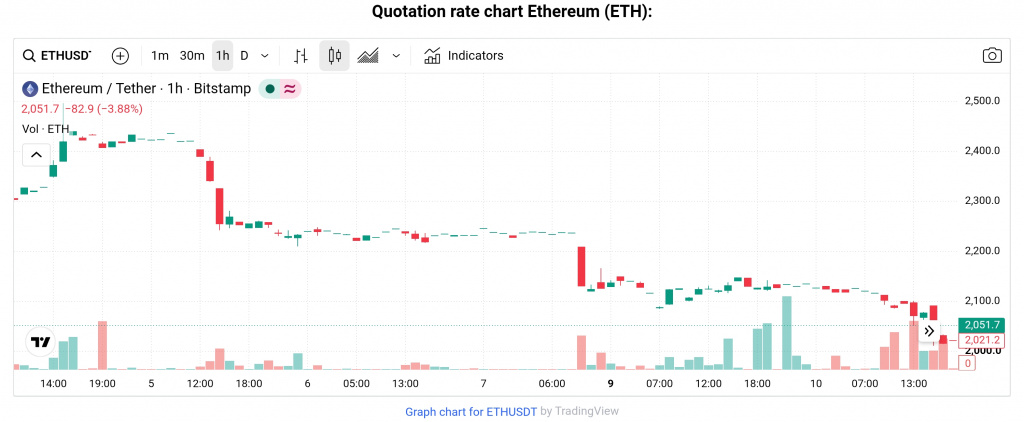
The comments came during a challenging market window, as Ethereum struggled to maintain key support levels around $2,000 amid broader institutional outflows and macroeconomic friction.
Redefining Ethereum's Core Value Driver
For several years, a primary pillar of the Ethereum thesis focused on network economics, specifically the "ultra-sound money" narrative, where transaction fees burned under EIP-1559 reduced ETH supply during high-activity cycles.
However, Buterin argued that Ethereum’s fundamental value should not be primarily judged by transaction fee burn rates or short-term yield generation. Ensuring the underlying consensus layer remains invulnerable to nation-state attacks or centralized control. Furthermore, maintaining a predictable, durable base layer that serves as a neutral settlement floor for global finance.
Buterin’s remarks address a growing debate within the community regarding the balance between Layer-1 fee revenue and Layer-2 expansion, reiterating that Ethereum's primary mandate is providing decentralized security infrastructure rather than acting purely as a yield-generating asset.
Volatility and Redemptions
The policy clarification arrived against a backdrop of heightened market volatility and institutional redemptions. Data from early November 2026 indicates that U.S. spot Ethereum ETFs recorded roughly $365 million in net weekly outflows, contributing to a combined $1.65 billion withdrawn across major crypto funds in early November.
Ethereum traded near $2,090 on November 10, reflecting persistent downside pressure alongside broader risk-asset liquidations triggered by hot U.S. inflation data and shifting Federal Reserve interest rate expectations.
Despite immediate price headwinds, analysts note that Buterin's perspective reinforces a strategic transition for Ethereum, positioning ETH as the fundamental, decentralized trust layer for modern financial systems rather than relying on short-term fee mechanics.
Disclaimer. The data provided is collected by the author and is not sponsored by any company or token developer. This is not a recommendation to buy or sell cryptocurrency and should not be viewed as an endorsement by Coinidol.com. Readers should do their research before investing in funds. Brought from CoinIdol.com.
News
News
News
Price
Price

(0 comments)