

Bitcoin Hits 2026 Low on Iran Rhetoric

In a primetime address on April 2, 2026, the President vowed to strike Iran “extremely hard” in the coming weeks, a move that sent immediate shockwaves through global markets.
Bitcoin, often touted as a "digital gold" hedge, initially buckled under the weight of a strengthening U.S. dollar and surging oil prices, which topped $106 a barrel.
By the morning of April 3, Bitcoin plummeted to $65,834, marking its lowest price point of 2026. The drop wasn't solitary; Ethereum fell 5% and BNB declined 6.8%, as the prospect of an escalated conflict in the Strait of Hormuz, effectively closed since mid-March, spooked even the most "diamond-handed" institutional investors.
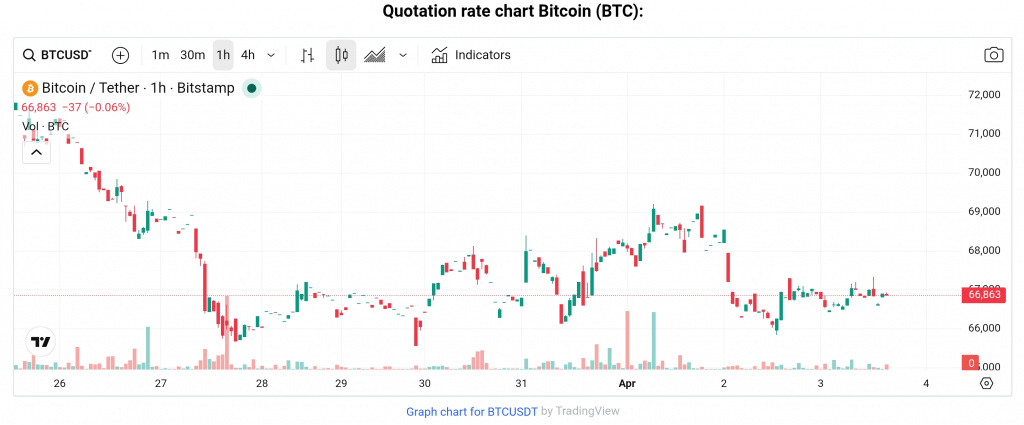
The irony is palpable
Bitcoin was born as an alternative to centralized financial chaos, yet it remains deeply sensitive to the words of the world's most powerful centralized figures. Spot Bitcoin ETFs saw a staggering $174 million in net outflows on Wednesday alone, reflecting a "risk-off" sentiment that has momentarily overshadowed the "halving cycle" optimism.
While brief relief flickered through the charts following reports of Omani mediation efforts, the market remains on a knife-edge. For the retail investor, it’s a candid lesson in macro-economics: when the cannons start to thunder, the safe haven narrative often gets tested by the cold reality of liquidity needs.
Whether this is a generational buying opportunity or the start of a deeper slide depends entirely on how the geopolitical chess pieces move over the next 48 hours.
Disclaimer. The data provided is collected by the author and is not sponsored by any company or token developer. This is not a recommendation to buy or sell cryptocurrency and should not be viewed as an endorsement by Coinidol.com. Readers should do their research before investing in funds.
News
Price
Coin expert
Price
News

(0 comments)