

Key Drivers Behind Bitcoin’s Recent Correction and Risk-Off Sentiment
Updated: Oct 09, 2026 at 23:21
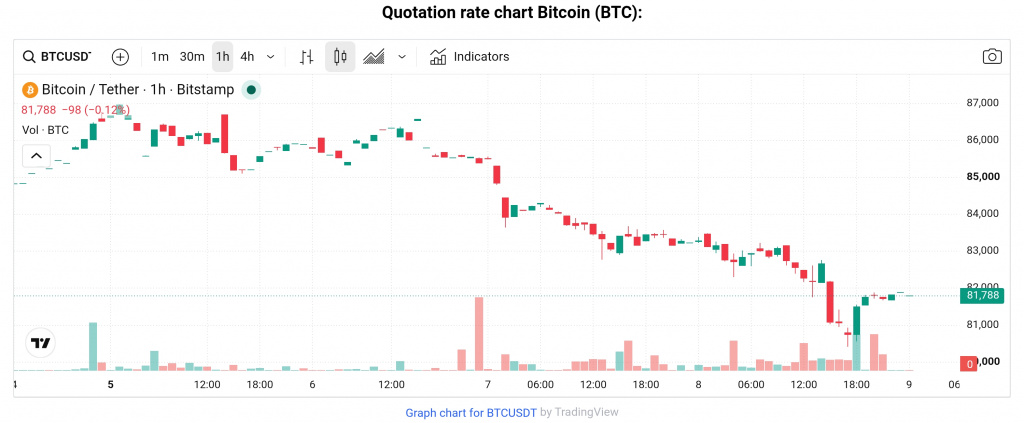
As the cryptocurrency market digests recent volatility that pulled Bitcoin back toward the $81,000 to $83,000 range.
According to the recent reports, the price pullback was primarily fueled by a cooling of spot market demand and an unsustainable buildup of leveraged derivatives.
Fading Demand and Leverage Risks
The primary engine behind Bitcoin’s mid-September surge to $87,000 was aggressive, consistent spot accumulation, particularly via U.S. exchange-traded funds (ETFs). As October began, spot inflows cooled significantly, as Coinidol.com reported, leaving the market without the immediate organic buying pressure needed to absorb lingering sell walls.
Furthermore, macroeconomic uncertainties, combined with rising bond yields and renewed caution ahead of upcoming U.S. economic data, caused institutional and retail traders alike to adopt a risk-off posture.
Analysts emphasized that the heavy concentration of leveraged trading positions left the market structurally fragile. When prices initially slipped, this leverage created a cascading effect, triggering automated liquidations that accelerated the downside movement before stabilizing around key support floors.
Market Resilience and the Path Ahead
Despite the corrective wave, market structure metrics indicate that the broader structural bull trend remains intact. Rather than a systemic capitulation, experts frame the correction as a necessary cooling period that washed out over-extended perpetual futures positions.
As spot markets seek a stable equilibrium near the lower-$80,000 bands, traders are closely monitoring order book depth and upcoming macroeconomic catalysts to determine whether accumulation will resume ahead of historical mid-fourth-quarter seasonal strength.
Disclaimer. This data are the personal opinions of the author. The data provided is collected by the author and is not sponsored by any company or token developer. This is not a recommendation to buy or sell cryptocurrency and should not be viewed as an endorsement by Coinidol.com. Readers should do their research before investing in funds.
Price
Price
Blockchain
PR

(0 comments)